The Binders

by Rhonda Anders, January 30, 2026

A few nights ago, I had a dream that has me thinking.

I was tired, the kind of tired that settles in after a full week of work, when your body is worn out but your mind refuses to power down. Sometime early in the morning, I remember waking up and checking my email, needing to make sure I hadn’t overslept or missed something important. It’s a strange pressure we carry almost without noticing, like a reflex. Once I reassured myself that everything was fine, I finally fell back asleep.

That’s when the dream began.

I was swimming in a lake. It was a beautiful lake, peaceful, open, quiet. I wasn’t rushed. I wasn’t checking anything. I wasn’t keeping track of time. I was just swimming and snorkeling, fully present, and genuinely enjoying it.  Snorkeling is one of my favorite things to do, so it was great.

When I eventually made my way toward the shore, I noticed something odd. Someone had left all of their belongings along the edge of the water, shoes, glasses, and several binders stuffed with papers. I stood there dripping and curious, scanning the shoreline as if I had stumbled into something that didn’t belong to me. I looked around for the owner, but no one was there. So I opened the binders.

Inside were papers from my high school years, documents that felt strangely familiar. Old assignments. Reminders of the past. And then, unexpectedly, there were papers from my current job as well. Things from my life right now. The present. The responsibilities. The work. The weight of what I’m carrying these days. None of it made sense. Who would leave all of this here?

I felt a sudden urgency. Whoever these things belonged to needed them. I wanted to find the owner. I wanted to return everything. I searched and searched, but I never found the owner. Eventually, I turned back toward the lake.

While I was gone, the water had risen. The shoreline looked different now. The binders I’d seen earlier were no longer safe and dry, they were soaked, the pages sticking together, the corners curling and dissolving. They were sinking into the lake, as if being swallowed. The shoes were gone. The sunglasses had disappeared. And the binders, filled with past accomplishments and present responsibilities, were slipping beneath the surface.

I went back into the water, trying to retrieve what I could as it drifted toward the bottom. I tried to save the papers, to hold on to something, anything. Even though I didn’t know who they belonged to, I felt responsible. But it was impossible. The pages were disintegrating in the water, breaking apart in my hands.

Somewhere in the middle of all that effort, I noticed someone standing nearby, a teacher from the high school. He was watching me. Advising me. Calling me to stop swimming. Calling me to come out of the water.

And then I woke up.

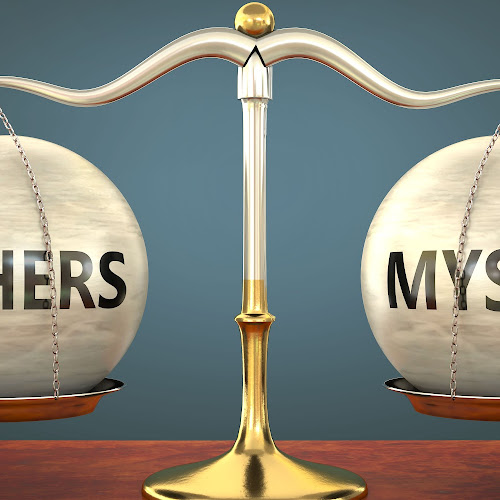
It wasn’t until I was fully awake that I realized those binders belonged to me. The person who had left behind all the papers and proof and performance and identity markers....that person was me.

The binders represented so much of what we think matters: our achievements, our titles, our productivity, our history. All the carefully held evidence that we’ve done enough, been enough, built enough. The things we cling to when we’re afraid we might be forgotten.

But in the dream, when the water rose, all of it became as fragile as paper. The pages blurred. The binders sank. The things that once felt important didn’t stay important for long. Because one day, the things we spend our lives chasing may feel as useless as soggy papers at the bottom of a lake.

But we won’t be useless.
And we won’t be forgotten.

Because what matters most isn’t what we’ve collected or proven. What matters is who we are, and even more, whose we are. What matters is our relationship with the One who teaches us, the One who watches us flailing in the water and calls us out, the One who holds us steady when everything else starts to sink.

The lake can rise. The world can shift. The old landmarks can change until we don’t recognize them anymore. But His voice remains.

What Matters In Eternity?

So many of the things we strain for, stress over, sacrifice peace for, are the very things that will one day be forgotten. They feel important now. They look impressive stacked neatly in binders, saved in files, and displayed online for the world to see. They give the illusion of permanence, as though they will always be there to prove our worth. But time has a way of rising, and when it does, much of what we once held so tightly drifts to the bottom like soggy paper.

It isn’t that these things are wrong. Education isn’t wrong. Hard work isn’t wrong. Resumes aren’t wrong. We need jobs and stability. We are called to steward our responsibilities well. But we were never meant to build our identity on things that can sink. When life shifts, when health changes, when a job ends, when seasons turn, or when the world rearranges itself without warning, those familiar “proofs” of worth can disappear faster than we ever imagined. The shoes. The glasses. The binders. All of it gone.

So what remains when the water rises?

What remains is the relationship between the created and the Creator. What we do with the days we’ve been given.  What remains is how we love, how we serve, how we forgive, and how we show up when someone is hurting. God cares about how we treat the people who can’t offer us anything in return. Our lives are measured not by what we accumulate, but by whether we make room for compassion, whether we notice the poor, whether we help the weak, whether we choose gentleness over sharpness, and whether we quietly and faithfully work to further the Kingdom of God while we’re still here.

Solomon understood this better than most. In Scripture, he had everything: wealth beyond imagination, power, influence, admiration, and achievement. He had more than enough, in fact, more than anyone else on earth at the time. And he had wisdom too, the kind the world had never seen. Solomon didn’t stumble into that wisdom by accident. He asked God for it, and God was pleased with his request. God gave it generously, and Solomon became known across the world as the wisest man alive.

If anyone should have been satisfied, it should have been Solomon. If anyone should have discovered the secret to “enough,” it should have been him. And yet, in Ecclesiastes, Solomon says something that still startles us: that the pursuit of it all is meaningless, like chasing the wind. How could the most wealthy, most influential, most accomplished king on earth look at his own life and say, This isn’t it?

But Solomon is telling us what we keep learning the hard way. Even wisdom isn’t enough to make us whole. Even success isn’t enough to anchor the soul. Even abundance can still leave us empty. His wealth and achievements weren’t lacking because they weren’t impressive, they were lacking because they were never eternal. 

What matters most on this fallen earth isn’t found in those binders. It isn’t found in Instagram posts, polished resumes, or the carefully curated lives we build to prove we’re worthy. It isn’t found in being admired, promoted, applauded, or perfectly “put together.” Those are fragile treasures. They don’t hold when the water rises.

But the Kingdom does. And the love of God does. And the people we serve, the ones we help, the ones we pray for, the ones we carry when they can’t carry themselves, those things echo longer than paper ever could.

Collecting Binders 

We carry a lot in this world. We always have. From the beginning of Genesis, humanity has lived under the weight of a broken world. When the earth fell under the curse, work became hard. Putting food on the table became hard. Relationships became complicated and fragile. Nothing came easily anymore. Life itself required effort, endurance, and persistence. We would no longer move through this world untouched, and we don’t.

So we carry it. We carry expectations placed on us when we were young, long before we had the language to name them. We carry the pressure to succeed, to perform, to be useful, to be admired. We carry disappointments and losses we never fully processed, griefs we learned to tuck away so we could keep functioning. And then, as adults, we layer today’s expectations on top of all of that history. No wonder the weight feels so heavy. Pressure didn’t start last week. It’s been with us our entire lives.

Everyone responds to that weight differently. I tend to swing to extremes. When pressure builds, I can become incredibly productive.  I organize. I achieve. I collect binders. There’s comfort in order and accomplishment, in being able to point to something tangible and say, See? I’m handling this. But when the pressure becomes too much, I swing the other direction. I shut down. I hide. I numb myself with distractions. I scroll. I watch YouTube. I pretend the binders aren’t there at all. And I suspect most of us recognize ourselves somewhere in that tension between overfunctioning and avoidance.

That’s why Jesus’ words land with such unexpected gentleness when we finally slow down enough to hear them. He says, “Come to me, all who are weary and burdened, and I will give you rest… For my yoke is easy and my burden is light.” At first, that sounds almost impossible. A light burden? An easy yoke? In a world that has never felt light or easy?

A yoke, after all, was a wooden beam placed across the shoulders of oxen so they could pull a load together. It didn’t remove the work; it redistributed the weight. The purpose of the yoke was never comfort, it was companionship. Jesus isn’t promising a life without effort. He’s offering a way to stop carrying everything alone.

That offer stands in direct contrast to what the world tells us. The world insists that the solution to pressure is toughness, strength, and relentless effort. Work harder. Carry more. Fill both hands. Prove your worth. But God tells a different story. And interestingly, so does Solomon.

Back in Ecclesiastes again, Solomon observes that “better one handful with tranquility than two handfuls with toil and chasing after the wind.” He had lived the life of two full hands. He knew the cost of always reaching for more. And he noticed that peace is often lost not in scarcity, but in excess.

Suddenly, the binders in my dream make sense. I’ve been collecting them my whole life, past and present, achievement and expectation, responsibility layered on responsibility, gripping tightly with both hands. And maybe the invitation has never been to organize them better or carry them longer. Maybe it has always been to set them down. To take the yoke Jesus offers instead. To learn that one handful, held with Him, is lighter than two held alone.

Life Without Binders

A few years ago, our house caught on fire.

It started after a Christmas toy malfunctioned and exploded, and within moments, firefighters were on the scene while everything we owned burned. The kids were taken into a neighbor’s house so they didn’t have to watch it happen, but I stayed outside and watched the flames take over the place we had lived our lives. Still, even in the shock of that moment, I remember feeling profoundly grateful that every one of us made it out safely.

Standing there, watching everything burn, I knew something important: all of that stuff could be replaced. Not everything, there were mementos and irreplaceable pieces of our story, but the house, the furniture, the belongings… those things were not us. I still had me. I still had my family.

And yet, even that experience isn’t quite the same as the question on my mind now.

What would happen if I lost my binders?

Who am I without my accomplishments, my achievements, my productivity, my carefully earned proof that I’ve done something worthwhile with my life? Who am I without the man-made awards, the recognition, the reputation I’ve built?

Those questions go deeper than losing possessions. Because binders don’t just hold papers, they hold identity. They shouldn't but they do.  They hold validation. They hold the quiet hope that if we stack enough evidence together, it will finally mean something.

When I start looking at my life through the lens of Christ, I have to ask myself some uncomfortable questions. What actually matters to Christ? Are my days centered on the things He values most? Do I care more about my own ego, my reputation, and getting ahead than I do about someone who is suffering and needs compassion? Do I miss the things God cares deeply about simply because I’m too busy checking things off a list?

Of course, work matters. Deliverables matter. Responsibilities matter. God understands that we live in a world where bills must be paid and work must be done. And in His grace, I’ve often found that He gives us time for both, time to work faithfully and time to love well. The question is not whether we can get things done. The question is where our heart lies while we’re doing them.

Are our hearts aligned with His? Are we seeking the things He asks us to seek?

Jesus said something that flips our entire value system upside down: “Whoever wants to become great among you must be your servant… For the last will be first, and the first will be last.” The Kingdom of God does not run on the same economy as the world. Everything is reversed. What we celebrate here is often overlooked there, and what heaven honors rarely trends on earth.

And yet, here’s the strange and beautiful truth: when we start living that upside-down Kingdom now, we begin to experience a deeper peace and joy. Not because life gets easier, but because we’re finally doing what we were made to do. We were never designed to live for ourselves alone. We were designed for a selfless life.

Solomon talks about this, too. In Ecclesiastes, he warns that it is better to sit with the realities of life, even sorrow, than to drown ourselves in endless entertainment. He writes that it is better to go to the house of mourning than to the house of feasting, because reflection shapes the heart. Remember, he could have had any entertainment he wanted, at any time, without consequence. His wealth was endless. Pleasure was always within reach.

And yet, he tells us not to chase it.

Meanwhile, we can flip to the New Testament and find Paul writing letters from prison.

Not from a place of comfort or security, but from a cell. From chains. From hunger and uncertainty. From a life stripped of status, safety, and control. If anyone had reason to despair, to feel forgotten, to question whether obedience had been worth it, it was Paul. And yet, as we read his letters, we don’t find bitterness or self-pity. We find joy. We find contentment. We find purpose.

Paul writes about rejoicing even in suffering. He speaks of learning to be content whether he has much or little. He encourages believers to set their minds on what is true, noble, and eternal. This isn’t the language of a man who has lost everything that matters. It’s the voice of someone who has discovered what actually matters.

That contrast should stop us in our tracks.

By the world’s standards, Paul’s life looked like failure. He had given up power, position, safety, and reputation. He was misunderstood, persecuted, imprisoned, and ultimately killed. If success is measured by comfort and applause, Paul had none of it. And yet, his life continues to bear fruit thousands of years later. His words still shape hearts. His faith still strengthens believers. His obedience still echoes.

Solomon had everything the world promises will make us happy, and he called it chasing the wind. Paul had almost nothing, and he spoke of peace that passes understanding.

I think we’ve gotten it backwards.

We chase security, while Paul chased faithfulness.
We chase comfort, while Paul embraced obedience.
We chase recognition, while Paul poured himself out for others.

Paul understood something we resist: that joy is not the reward for an easy life, but the fruit of a surrendered one. Contentment doesn’t come from having enough, it comes from knowing Who is enough. Purpose isn’t found in protecting our lives, but in giving them away.

In the end, God isn’t going to ask us for our binders. He isn’t going to ask how full our hands were, how impressive our resumes looked, or how admired we were by the world.  He’s going to care about our hearts.

And the strange, upside-down truth of the Kingdom is this: when we finally loosen our grip on the binders and place our hearts fully in His hands, we discover the very joy and peace we were chasing all along.


The Drift

by Rhonda Anders, January 22, 2026

It had been a long day.

I drove home from work already knowing two things to be true: I was tired, and I wasn’t going to feel like going to church. The couch sounded inviting. Quiet sounded necessary. Rest felt earned.

And yet, I knew I needed to go.

That evening was Praise and Worship night at our church. I didn’t have much energy for it, my body felt heavy, my spirit quiet. But wanting to be in His house was enough, so I mustered the courage to go anyway.

As the band warmed up and the first notes of praise filled the room, something in me began to loosen. My shoulders relaxed. My breath slowed. I felt revived in the gentlest way, not energized, exactly, but peaceful.

There was a sweet woman standing next to me. Since it was a bilingual service, it became clear pretty quickly that she didn’t speak English. She must have been seventy-five years old, maybe more. Her hair was silver, her movements slow, her joy unmistakable.

Even though we didn’t share the same language, we prayed for each other during the service. She prayed in Spanish. I prayed in English. She reached over and hugged me several times, unprompted and sincere. A woman I had never met before, yet somehow felt known by.

And then the thought struck me.  I will know her in heaven.

We will meet there again, and we’ll be able to speak to one another then, fully, freely, without barriers. Isn’t that an incredible thought? That love needs no shared language. That the Spirit translates. What begins as a quiet hug in a church pew might be the beginning of an eternal friendship.

Church is not just a building or a service order or a familiar set of songs, it is a glimpse of what is to come. A room full of people from different places, speaking different languages, carrying different stories, all drawn together by the same Spirit.  

By the end of the night, I was so glad I had pushed through and come anyway. I walked in tired and hesitant, but I left lighter, grateful, steady, and somehow more alive. I may not have been able to hold a real conversation with that sweet woman beside me, but I still felt like I’d made a friend, the kind heaven will finish introducing properly one day. And it reminded me of something I keep learning the hard way: tiredness can blur our vision, and fatigue can make everything feel optional. 

Rest is good and holy, yes, but so is choosing what strengthens us when we’re tempted to retreat. It takes effort to swim upstream when the world is constantly pulling us toward distraction and discouragement. But there is something deeply important about making a concerted decision to be in the right place, around the right things, under the right words.  Because more often than not, that’s where God meets us, restores us, and reminds us who we are.

Rest is holy, but drift is dangerous.

The truth is, I wasn’t just physically tired that night, I was exhausted because I’d been fighting a slow drift. My mind had been reeling in a place of negativity, and instead of seeking the things I know help pull me out of it, I leaned into distraction. I scrolled. I isolated. I stayed busy enough to avoid the ache, but not intentional enough to heal it.

And do you know what the problem is with distraction? It makes us tired. Not rested, tired. It drains our energy and leaves us with even less strength to pursue the very things that would restore us. Distraction is sneaky like that. It feels like relief in the moment, but it quietly steals our appetite for anything nourishing. It dulls us, then convinces us we’re too depleted to do what’s actually good for us.

My mind had been sad. Christmas in Florida didn’t go the way I had hoped it would, and part of me needed time to process that, needed space to admit disappointment and sit with it honestly. But instead of letting God meet me in that sadness, I tried to outrun it. And for me, sadness is a showstopper for creativity. I don’t write. I don’t dream. I don’t reach. I just… cope. I bury myself in true crime shows and endless scrolling. It sounds funny, and honestly, it kind of is, until the moment I realize I’ve gone emotionally numb and nothing has actually changed. While I was distracted, no healing took place.

That’s why drift is so dangerous. We can call drift “rest” and tell ourselves we just need a break, and don’t get me wrong, there is such a thing as true, holy rest. God designed it. We need it. But what I was choosing was escape. It was dulling. It was disconnecting. And the enemy loves that kind of distraction. He uses it to lure us away from God, yes, but he also uses it to fatigue us. And fatigue doesn’t just affect our energy. It affects our perspective.

That’s why choosing worship mattered more than usual this week. Because choosing God, choosing His presence, choosing His house, choosing praise even when we feel hollow recenters the mind. It lifts our eyes. It interrupts the spiral. And little by little, it pulls us back to truth again.

Whatever is true, whatever is noble, whatever is right, whatever is pure… think about such things.
—Philippians 4:8

Showing up is spiritual warfare

I’ve started to notice something about the moments when I decide to do something healthy for my soul: obstacles suddenly appear. It seems like the minute I make a decision to choose what’s good, what’s steady, what’s holy, something always tries to get in the way. Sometimes it’s something real. Sometimes it’s something imagined. But either way, it’s a resistance I’ve learned not to ignore.

When I decide to go to church on Sundays, sometimes I don’t sleep well the night before. I wake up tired. Perhaps I don’t feel great in the morning. Or I just… don’t want to go. My body feels heavy. My mind starts offering reasons. My bed looks more and more comfortable. And if I’m being honest, it’s rarely one big dramatic thing, it’s usually a handful of small inconveniences that stack up until they feel like permission to quit.

A few weeks ago while getting ready to leave on a Sunday morning, I couldn’t find my keys anywhere. We searched the house, retraced our steps, checked pockets and counters, and finally gave up and took my son’s car to church. And I don’t think it’s a coincidence that things like that always seem to happen on Sunday mornings. Because sometimes spiritual warfare doesn’t look like a crisis. Sometimes it looks like lost keys, poor sleep, sudden fatigue, a bad mood, or a quiet sense of “it doesn’t matter.”

But I’m learning that showing up matters more than I’ve ever realized.

If the enemy can’t keep us from God with something loud, he’ll often try to do it with something small.  Anything that convinces us to stay home, stay comfortable, stay disconnected. He doesn’t always have to destroy our faith; sometimes he just has to dull it. Delay it. Wear it down with a thousand little reasons to quit. 

Some of the most important spiritual battles I’ll ever fight won’t be fought with grand speeches or dramatic moments, they’ll be fought in ordinary decisions.  Getting dressed when I’d rather stay in pajamas, walking in when I feel empty, worshiping when my mind feels scattered. Showing up is not nothing. It’s obedience. It’s resistance. It’s choosing light over drift. And more times than I can count, it’s been on the other side of that simple “yes” that God has met me with exactly what I needed.

Watch and pray so that you will not fall into temptation. The spirit is willing, but the flesh is weakMatthew 26:41

The Upstream Life

I think that’s part of why living a faithful life can feel like swimming upstream. Not because everything is evil or scary or dramatic, but because so much of the current of the world is quietly moving in the opposite direction of what makes a soul well. The world tells us to indulge every feeling, to follow every impulse, to stay entertained, to stay outraged, to stay distracted, to stay busy. It rewards sarcasm, celebrates cynicism, and makes peace feel impossible. And if you’re not careful, you can wake up one day and realize you haven’t done anything “wrong”, but you’ve also drifted far from what’s right.

So the upstream life takes effort.

It takes effort to keep your heart soft when the world trains you to harden. It takes effort to forgive when resentment feels justified. It takes effort to pray when your phone offers easier comfort. It takes effort to stay hopeful when negativity feels safer. It takes effort to guard your mind when everything around you is loud and demanding and constantly competing for your attention.

That’s why choosing the right place matters. Choosing worship matters. Choosing the Word matters. The upstream life isn’t built on one emotional high, it’s built on small, steady decisions that keep turning your face toward God. It’s built on choosing what strengthens you instead of what numbs you. And in a world that constantly pulls us toward the shallow and the temporary, choosing the deeper things will always feel like resistance.

I used to live in Alaska, and I still remember the first time I went fishing in an Alaskan river. I was standing out in the water wearing waders, trying to keep my balance against the current, when I felt something brush hard against my legs. At first I thought I’d stepped on a rock or the water had shifted, but it wasn’t that. It was salmon.

There were so many of them swimming upstream that they were actually bumping into me as they passed. It was one of the strangest and most awe-inspiring things I’d ever experienced, this steady, relentless movement against the force of the river. The current was pushing one way, but they were going the other. Not lazily drifting. Not circling. Not wandering. They were moving with purpose.

Salmon swim upstream to spawn. It’s how life continues. They’re not fighting the current because they enjoy struggle, they’re fighting it because something in them is pulling them home. Something deeper than comfort. Something stronger than ease. They’re driven by instinct and design, returning to the place where new life will be born. And it isn’t easy. They climb, they push, they resist the pull of what would be simpler, because drifting downstream might be easier, but it would never take them where they’re meant to go.

And I think faith can feel like that.

The upstream life isn’t glamorous. It isn’t effortless. Sometimes it looks like choosing church when you’re tired. Choosing worship when your mind is heavy. Choosing prayer when distraction is calling your name. Choosing discipline when comfort feels more reasonable. But the upstream life is the one that leads us back to what is true, back to God’s presence, back to clarity, back to spiritual health. Because drift is always available, but purpose requires intention.

The Naming

by Rhonda Anders, January 05, 2026

We’re standing on the edge of a new year, and I’ve found myself with more space to breathe than usual.

Florida has a way of slowing everything down. Recovery does too. As illness worked its way through our family, life narrowed to simple, steady moments, watching the waves roll in and out without urgency, sitting by a campfire in the evenings as the air cooled, noticing dolphins surface briefly and disappear again just offshore. In that quiet, when there was nothing to rush toward and nowhere I needed to be, my thoughts kept returning to a single, rather random question: Who does God say we are?

The world has no shortage of answers. It tells us to look a certain way, speak a certain way, fit neatly into a narrow, carefully defined box. It insists that we should all somehow be the same, polished, perfected, and perpetually improving. This week, I’ve watched more television than I normally do, and with it, more advertisements than I usually see. I’m not often exposed to them; a busy schedule and ad-free YouTube tend to shield me from most of that noise. But watching now, I couldn’t help noticing how tight the world’s definition of beauty has become. How repetitive. How uniform. How exhausting.

And yet, nothing about God is uniform.

He is endlessly creative, and His creation reflects that truth everywhere we look. The ocean doesn’t apologize for its depth or variety. No two waves arrive exactly the same way, and still, they all belong. Dolphins don’t question whether they measure up before breaking the surface. Diversity isn’t a flaw in God’s design.  It is the design.

Scripture affirms this in a way that feels deeply personal:

“For you created my inmost being; you knit me together in my mother’s womb. I praise you because I am fearfully and wonderfully made.”
—Psalm 139:13–14

God didn’t rush when He made you. He didn’t mass-produce you or copy someone else’s blueprint. The psalmist tells us He knit you together, intentionally, thoughtfully, with care woven into every part of who you are. Long before the world formed an opinion about your worth, God had already declared it.

And then there is this reminder from Peter, one that feels especially grounding in a culture that constantly asks us to prove ourselves:

“But you are a chosen people, a royal priesthood, a holy nation, God’s special possession…”
—1 Peter 2:9

Chosen. Royal. Set apart.

God calls us His daughters, and that makes us royalty, not in a loud or self-important way, but in the quiet confidence of belonging to the Most High King. He calls us set apart, not because we are better, but because we are His. And for those of us who stand for Jesus, especially in a world that often resists Him, Scripture reminds us that we are also warriors. Not always visible. Not always recognized. But faithful, steady, and strong in ways that matter deeply in the spiritual realm.

So while the world insists that we are not enough, God says something entirely different. He calls us precious. He calls us loved. He calls us His own.

As a new year approaches, this is what I want to carry with me, and what I want to gently remind any woman who may be reading: you do not belong to the world’s definition. You belong to God. And that truth changes everything.

The Anointing (Imagined by me)

The brothers stood in a line.

Their presence filled the space, men accustomed to being noticed, shoulders squared, faces confident, hands calloused from work that could be seen and measured. They looked like leaders. They looked like men who belonged at the center of the room. Samuel studied them carefully, searching for the familiar inner confirmation he had learned to trust, yet with each passing moment, the silence grew heavier.

No.

Not him.
Not this one either.

The line that had seemed so certain now felt unfinished, incomplete. Samuel hesitated, the weight of obedience pressing in on him. He had come with clear instructions, and yet none of the obvious choices fit. Finally, he asked the question that changed everything.

“Are these all the sons you have?”

There was a pause. Almost an afterthought.

“Well… there is still the youngest,” Jesse said. “But he’s out in the fields, tending the sheep.”


Jesse’s answer came casually, as if it hardly mattered. There was still the youngest, he said, but the work was ordinary. The boy was young. No one had thought it necessary to call him in.

Time stretched as someone was sent to fetch him. Dust clung to David when he arrived, the scent of the field still on him. His clothes bore the marks of work done far from witnesses. He hadn’t prepared for this moment because he hadn’t known it existed. He stood there, uncertain and out of place, surrounded by older brothers who had already measured themselves worthy of something greater. It would have been easy for him to shrink back, to wonder why he had been summoned at all.

Before anyone else could speak, God did.

Without hesitation, without explanation, the instruction was clear. This is the one.

Samuel moved forward, oil in hand, and the room seemed to hold its breath. The act itself was quiet, almost understated, yet its meaning thundered beneath the surface. As the oil touched David’s head, something irreversible took place. The youngest son, forgotten, uninvited, still smelling of sheep, was anointed king.

Shock rippled through the room. Confusion. Disbelief. Perhaps even offense. The brothers who had stood so confidently moments before now had no words. The father who hadn’t thought to call his son in from the field watched as God overturned every assumption he had carried. No crown appeared. No throne followed. Only a declaration from heaven that rewrote the story entirely.

It was then that God spoke words that still unsettle our assumptions today: People look at the outward appearance, but the Lord looks at the heart.

David left that place the same way he had entered it, no crown, no army, no change in status that the world could recognize. He would return to the fields. He would wait. But something had been spoken over him that could not be undone. God had named him long before the world would ever agree.

And maybe that is the part we most need to remember.

God’s view of you is not shaped by who notices you, who invites you in, or who overlooks you entirely. His declaration does not wait for the approval of others or the validation of the visible. He sees the heart. And what He sees, He calls enough.

What's In A Name?


The waves keep their steady rhythm, rolling in and out without needing permission or applause. The shoreline looks different each day, shaped quietly by forces unseen. There is something grounding about it, the reminder that not everything needs to be named or explained to matter. 

If you had asked David who he was, on that day before the oil, before the throne, before the songs, he would have answered simply. He was a shepherd. A young boy tending sheep. Someone responsible for keeping watch, for leading quietly, for protecting what was vulnerable. He would not have said “king.” Yet God looked at his heart and spoke a different name entirely.

And it makes me wonder if the same might be true for us.

So often we define ourselves by what we do. A grocery store clerk. An accountant. A lawyer. A teacher. A mother. A widow. Disabled. Overlooked. Faithful but tired. These labels may describe our circumstances, but they are not the full story. When God looked at David’s heart, He saw a king long before the world was ready to agree. It makes me pause and ask what He sees when He looks at us, here and now.

Because when God looks at the heart, He sees everything.

He sees the love we carry and the pain we’ve learned to live with. He sees the quiet ferocity it takes to keep showing up when life hasn’t been fair. He sees those who remain faithful to their commitments even when no one notices. He sees mothers who pour themselves out for their children, especially when their own stories were marked by absence or harm. He sees the widow. He sees the disabled. He sees what the world reduces to a category, and then He looks past it.

That’s not what God calls them.
That’s not what God calls you.

God names by the heart.

Have you ever wondered what He might say if He were to pronounce something over you? Try, just for a moment, to set aside the negative voices—we all carry them, and yes, we all carry sin—but imagine instead what God might delight in naming.

Creative.
Wise.
Steady.
Good with numbers.
Loyal.
A woman of great love.
A contagious laugh.
A gentle strength.
A heart shaped for compassion.

Perhaps even a heart of a princess.

Identity isn’t something we have to chase or prove. It’s something we receive. Long before the world speaks its labels over us, God has already named us by the heart. So as you step forward, into a new year, a new season, or simply another ordinary day, hold onto this: you are seen fully, known deeply, and called something beautiful by the One who made you. And whatever else may try to define you, let His voice be the one that lingers longest.

© Rhonda's Blog · THEME BY WATDESIGNEXPRESS